
The Rinjani-Lombok Geopark has once again achieved a significant milestone on the international stage by successfully retaining its status as a UNESCO Global Geopark (UGGp). This recognition was confirmed following the geopark’s successful revalidation process, through which it was awarded a “Green Card” for the second consecutive cycle—an outcome that reflects sustained excellence under UNESCO’s rigorous evaluation standards.
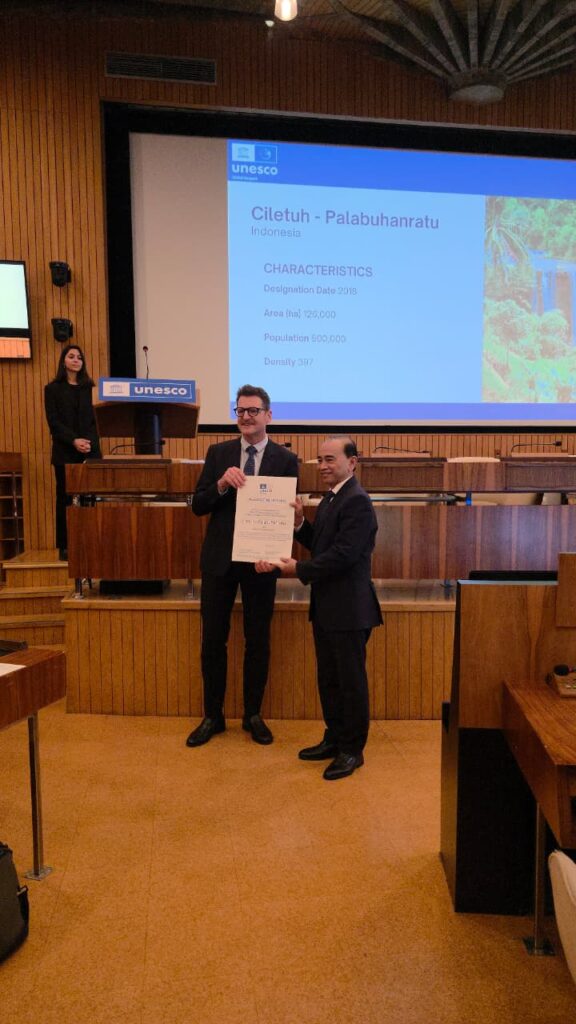
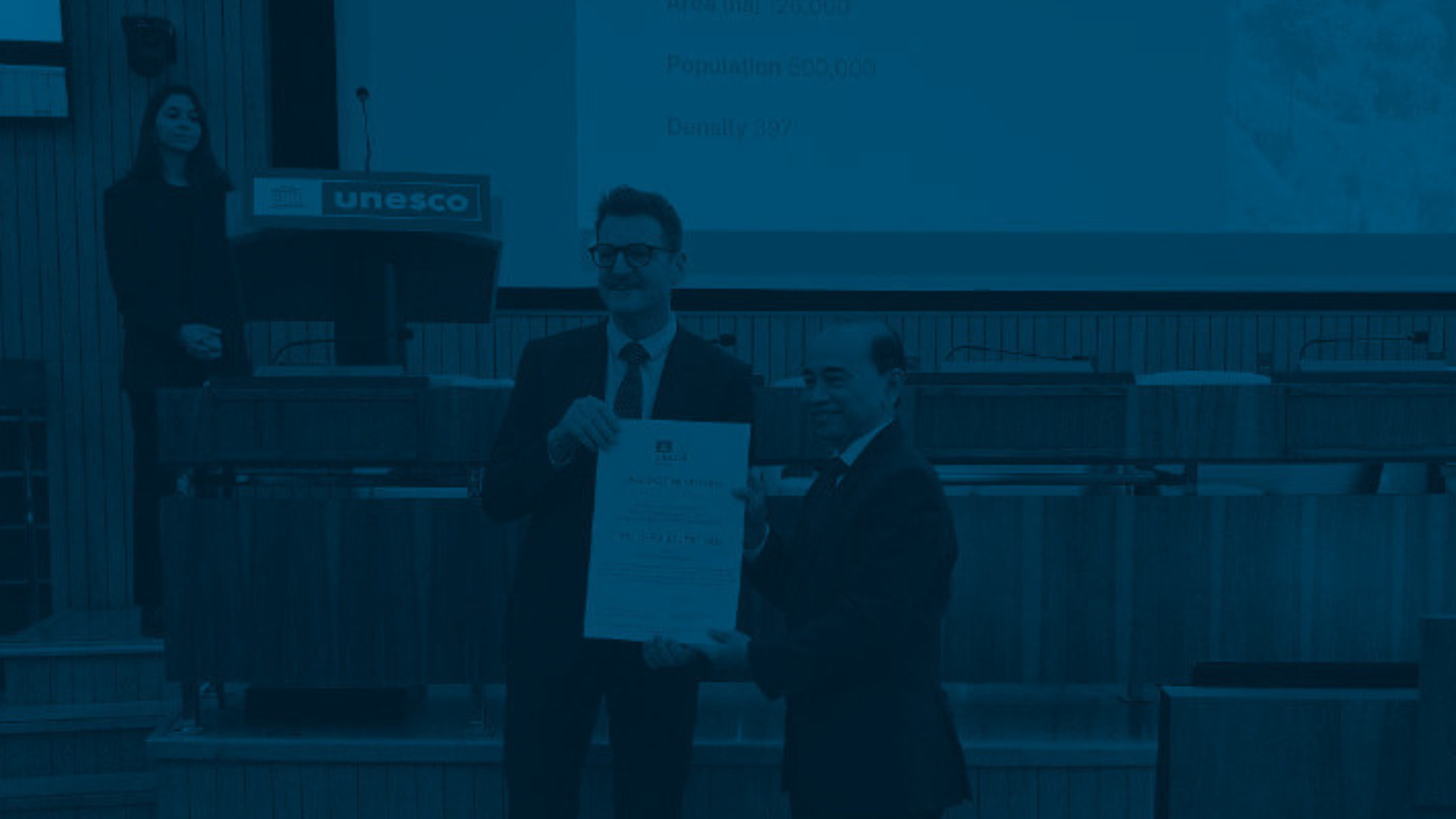
The official handover of the revalidation certificate took place at UNESCO Headquarters in Paris, France, on Tuesday, April 28, 2026. Representing the Government of Indonesia, the Ambassador Extraordinary and Plenipotentiary of the Republic of Indonesia to France, Mohamad Oemar, formally received the distinction from senior UNESCO officials during the ceremony.
Retaining this prestigious designation serves as concrete evidence that the governance and management of the Rinjani-Lombok Geopark continue to meet global standards. In particular, the geopark has demonstrated strong performance across UNESCO’s three core pillars: conservation, education, and sustainable local economic development. These pillars form the foundation of the geopark model, ensuring that natural heritage protection is closely aligned with community empowerment and knowledge dissemination.
The General Manager of the Rinjani-Lombok Geopark, Qwadro Putro Wicaksono, expressed both gratitude and pride in response to the achievement. He emphasized that maintaining UNESCO Global Geopark status is often more challenging than obtaining it initially, as it requires consistent performance, measurable impact, and continuous innovation over time.
“This second Green Card is global recognition of the collective hard work of all stakeholders in West Nusa Tenggara. It confirms that our programs—from protecting geological diversity to developing MSME-based geoproducts—are on the right track,” he stated.
Qwadro further explained that the revalidation process conducted by UNESCO assessors is comprehensive and highly detailed. The evaluation goes far beyond assessing the scenic beauty of the Rinjani landscape. Instead, it focuses on how effectively the geopark delivers tangible benefits to local communities, particularly those living within the “Rinjani ring.” This includes assessing governance systems, stakeholder coordination, education programs, and the economic impact of geopark-related initiatives.
One of the key factors contributing to Rinjani’s successful revalidation was its innovation in the field of education. Over the past four years, the geopark management has integrated geopark-related content into local school curricula across Lombok, as well as into community-based learning initiatives. This approach has strengthened public awareness of geological heritage and fostered a deeper sense of stewardship among younger generations.
In addition, disaster risk mitigation emerged as a significant value-added component in the evaluation. Given Lombok’s location within an active tectonic zone, the integration of geological knowledge into safety protocols for both residents and visitors has become a strategic priority. These efforts were positively recognized by UNESCO assessors as an example of how geoparks can contribute to resilience and risk-informed development.
During the certificate presentation in Paris, Ambassador Mohamad Oemar underscored that the Rinjani Geopark is not merely a tourism destination, but a vital natural laboratory for global scientific research. He described Rinjani as a “gem” within the global geopark network and highlighted Indonesia’s broader commitment to promoting its geoparks on the international stage. He also expressed hope that Rinjani’s success would serve as a benchmark and प्रेरणा for other Indonesian geoparks preparing for similar revalidation processes.
Looking ahead, Qwadro emphasized that the UGGp designation carries a significant moral responsibility. While celebrating the achievement, he noted that critical challenges remain, particularly in the areas of waste management and the risks associated with over-tourism. These issues are increasingly central to the geopark’s future strategy.
“Our challenge is no longer about the number of visitors, but the quality of visitors. We want those who come to Rinjani to be environmentally conscious and responsible,” he stressed.
Community empowerment will continue to be expanded through creative economy frameworks. Local products from the slopes of Mount Rinjani—including coffee, traditional woven textiles, and other MSME goods—are being developed and marketed under the official “Geoproduct” label. This designation enhances their market value and visibility, particularly in international markets, leveraging the credibility of UNESCO recognition.
With its second Green Card secured, the Rinjani-Lombok Geopark is now setting its sights on a long-term vision to become a leading model of geopark management in Indonesia. Strengthening international cooperation remains a key priority, including the development of “sister geopark” partnerships with countries such as Japan, China, and others, aimed at facilitating knowledge exchange and collaborative innovation.
The achievement in 2026 represents a meaningful milestone for the people of West Nusa Tenggara. Mount Rinjani, rising to 3,726 meters above sea level, is no longer recognized solely for its dramatic natural beauty, but also as a globally acknowledged symbol of harmony between humanity and the Earth.
The Provincial Government of NTB, through the Rinjani Geopark Management Agency, has reaffirmed its commitment to allocating the necessary resources and policy support to ensure that this Green Card status is maintained in the next revalidation cycle in 2030.
“This is not the end, but the beginning of a new phase. We invite all members of the community to continue protecting Rinjani, as this heritage is a trust we must preserve for future generations,” Qwadro concluded.